
Skip to content
Free written estimatesLocal crews
Call now (813) 555-0196
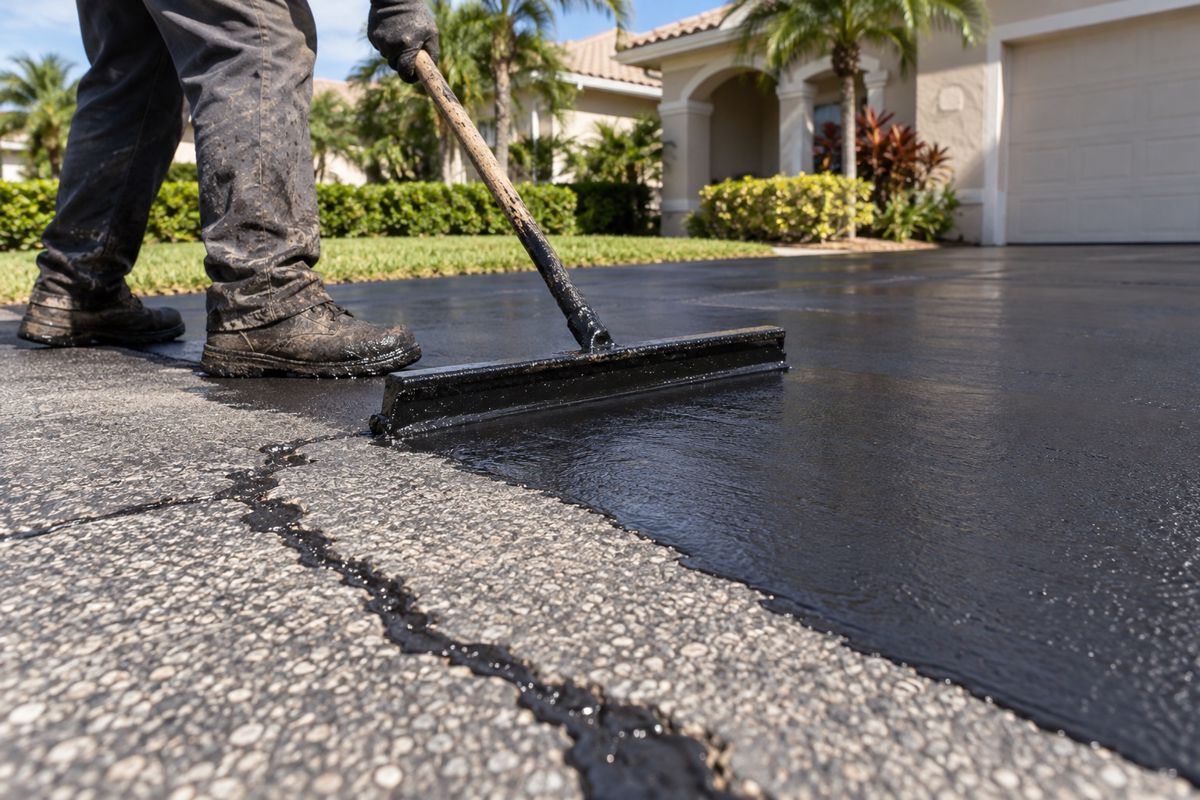
Worker squeegeeing black sealcoat across a faded gray Florida driveway

Sealcoating in Tampa, FL

Asphalt sealcoating and crack filling in Tampa

Protect asphalt from strong sun and heavy rain with crack filling and a fresh seal coat. We tell you honestly if the surface is better left alone or replaced.

  • Crack filling before every seal coat
  • Driveways, lots and private roads
  • Written quote with the scope listed

What is asphalt sealcoating and what does crack filling do?

Sealcoating is a thin protective layer that is applied over asphalt. It shields the surface from sun, water and oil, and it gives faded pavement a fresh dark look. It is a maintenance step, not a repair. It does not fix a damaged base or fill deep holes.

Crack filling comes first. Cracks let water into the base, and a seal coat alone does not close them. The crew cleans each crack, removes loose material and fills it with a flexible sealant that moves with the pavement. Filling cracks early stops small problems from turning into potholes.

Together the two steps slow down the wear that hot, wet Tampa weather causes. They work best on pavement that is still in fair shape. If the surface is badly broken, a patch or a new asphalt driveway is the better use of money.

When should asphalt be sealcoated in Tampa?

Timing matters. New asphalt needs time to cure before it is sealed. Many pavement professionals suggest waiting at least several months, and some say up to a year, so ask what your paving crew recommends. After that, a common guideline is every two to three years, though the right gap depends on the surface.

Signs the surface is ready

  • The black has faded to a dull gray
  • Small cracks are appearing
  • The surface feels rough or loose stones are coming off
  • Oil stains and rain marks are building up

Signs sealcoating is not enough

  • Cracks wider than a finger or a web of linked cracks
  • Soft or sinking areas
  • Potholes that need patching first

For those cases, see pothole repair and patching. Sealcoating over a failing base only hides the problem for a short while.

How does Tampa weather affect sealcoating?

Sealer needs dry pavement and enough time to cure. Rain too soon after the application can wash it out or leave a patchy finish. In Tampa, summer afternoon storms are common, so crews often plan sealing for mornings in dry spells. Spring and fall tend to offer steadier conditions than the wet summer months, but the exact timing depends on the forecast.

Heat helps the sealer dry, but very hot pavement can make it dry too fast. Humidity slows curing, so the surface can take longer to be ready for cars than you might expect. Your crew will tell you how long to keep vehicles and foot traffic off. Sprinklers should be switched off ahead of time, because water on the surface during curing spoils the result.

We do not quote a price until we see the pavement. These are the main factors.

  • Area. Total square footage drives most of the cost.
  • Crack length and width. A pavement with many cracks needs more filling material and more labor.
  • Surface condition. Oil stains and rough areas need cleaning or spot priming first.
  • Number of coats. Some jobs call for more than one coat.
  • Access. Parked cars, tight entries and obstacles slow the work.
  • Striping. Lots usually need new line striping afterward, which is priced separately.

A written quote that separates crack filling from sealing makes it easier to compare offers.

What should I expect on the day and when should I call?

Before the crew arrives, move cars off the area, turn off sprinklers and trim plants that lean over the pavement. The crew sweeps and cleans the surface, fills cracks, applies the sealer and marks off the area with cones or tape. Expect a strong smell for a few hours. Keep people and pets off until you are told it is dry.

Call us when you see cracks starting, when the surface looks washed out or when you are planning to repave and want an honest opinion first. Ask your crew about the next date to check the surface. You can find the rest of our services on the home page, and the blog has a longer piece on how often a driveway needs a seal coat.

  • Free written estimates
  • Local crews
  • Clear timelines
  • Site cleanup included

How it works

  1. Tell us about the surface

    Size, condition and goals.

  2. Site visit and quote

    We measure and price it in writing.

  3. Prep and paving

    Base, drainage and surface done in the right order.

Request sealcoating

Tell us what you need and we call you back.

Step 1 of 3

What do you need?

No obligation.

Questions about paving in Tampa

How often should asphalt be sealcoated in Florida?

A common guideline is every two to three years, though it varies. Heavy sun, regular traffic and oil leaks shorten that gap, while shaded pavement and light use can stretch it. Waiting too long lets cracks open and water reach the base. Sealing too often builds up thick layers that can flake. We will look at the surface and suggest a sensible schedule.

Can new asphalt be sealcoated right away?

No. Fresh asphalt needs time to cure, and sealing too early can trap oils and cause a soft, uneven finish. Many pros advise waiting several months to a year. Your paving crew should tell you the right time for the mix and weather they worked in. If you are not sure, ask us and we will explain why we recommend a given date.

Does sealcoating fix cracks and potholes?

No. Sealcoating is a protective layer, and it does not repair damage. Cracks should be cleaned and filled first, and potholes need to be cut out and patched. Sealing over unrepaired damage hides it for a short time and then the problems come back. A good quote lists the repairs and the seal coat as separate steps.

How long until I can drive on sealcoated pavement?

Cure time depends on temperature, humidity and how thick the coat is. It is often a day or more before cars can drive on the surface, and longer in damp weather. Your crew will tell you the right time. Driving too early leaves tire marks and can tear the sealer, which means redoing the work.

Is sealcoating worth it for a parking lot?

For lots in fair condition, usually yes. It slows sun damage, keeps water out and refreshes the look of the property. For lots with deep cracking and potholes, repair or resurfacing comes first. If you manage a larger site, ask for a quote that compares sealing with other options so you can choose based on the surface and your budget.

Ready when you are

Call now or request a quote online.

(813) 555-0196
Takes about 30 seconds. Get my free paving quote