
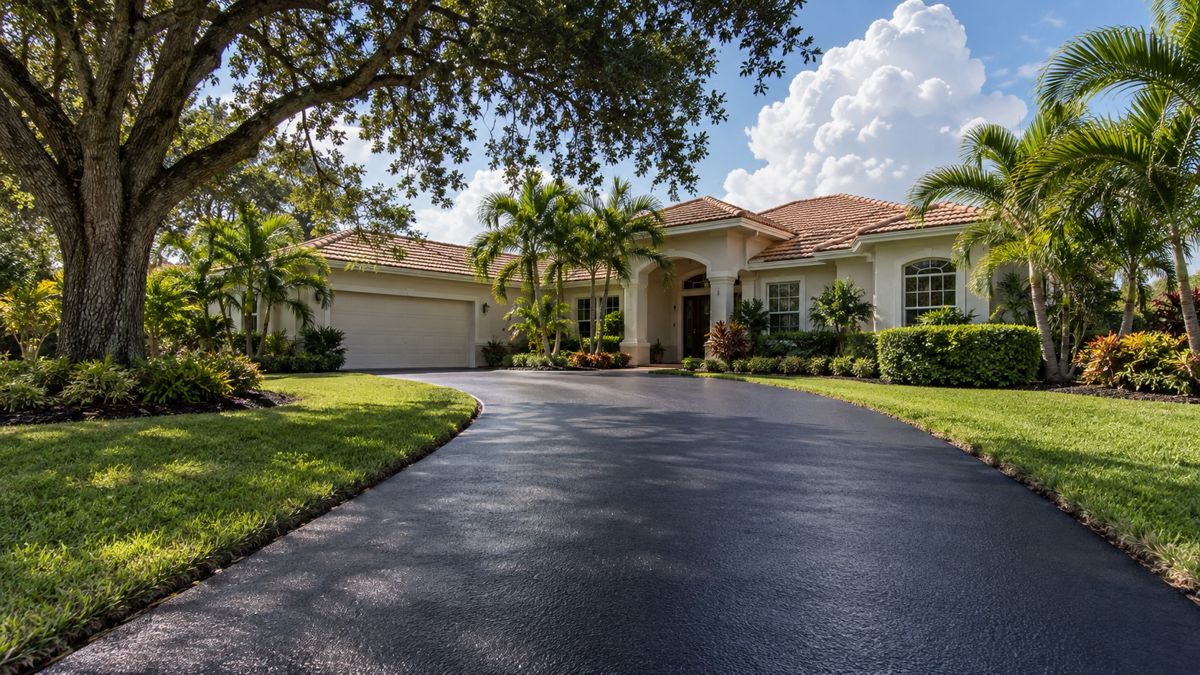
For most Tampa driveways, sealcoating every two to three years is a sensible guideline. Some need it sooner, some can wait a little longer. The right schedule depends on how old the asphalt is, how much sun it gets, how it drains and how much traffic it carries. This guide explains each factor so you can judge your own driveway.
What does sealcoating actually do?
Sealcoat is a thin, dark coating that goes on top of asphalt. It slows the damage that sun, water and oil cause. Asphalt is made of stone held together with a sticky binder. Over time, sunlight and heat dry out that binder, and the surface turns gray, rough and brittle. Sealcoat replaces some of that protection.
It is not a repair. It will not fix a sinking section, fill a deep crack or hold together a broken edge. Think of it like paint on a house. Paint protects wood that is in good shape, but it does not rebuild rotten boards.
Why does Tampa weather change the schedule?
Florida is hard on asphalt. The sun is strong for most of the year, and high heat softens and ages the surface. Heavy summer rain follows, and on sandy soil it can wash material out from under the edges of a driveway. Add humidity and the occasional tropical storm, and a driveway can wear faster than the same one in a cooler, drier state.
That is why many owners here do not stretch the gap too far. Still, more sealcoat is not always better. Layer on layer builds up a thick skin that can crack and flake. If your driveway sits in deep shade under live oaks, it may hold moisture and algae, which brings its own problems.
When is a new driveway ready for its first seal coat?
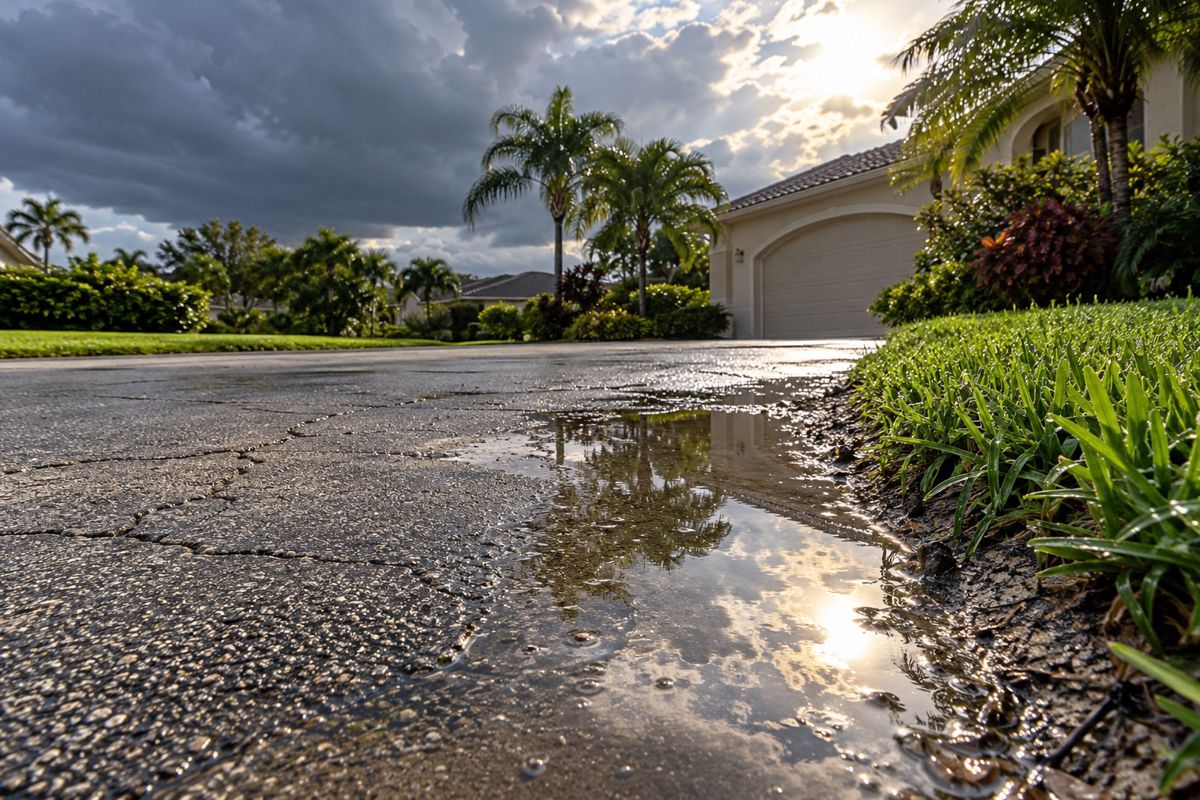
New asphalt needs time to cure. During that time, oils in the mix slowly work out and the surface hardens. Sealing too early can trap those oils and leave a soft or uneven finish. Many pavement professionals suggest waiting several months, and some say up to a year. Your paving crew knows the mix they used, so ask them for a date rather than guessing.
After the first seal coat, the usual two to three year pattern applies. Mark the date on a calendar. It is easy to forget when the last one was done.
What are the signs your driveway needs sealcoating?
You do not have to follow the calendar blindly. Look at the surface itself.
- Color. Fresh asphalt is deep black. If yours has faded to dull gray, the binder is drying out.
- Texture. Rough patches and loose stones on the surface mean the top layer is wearing.
- Small cracks. Thin hairline cracks are a good time to act. Water will get in through them.
- Oil spots. Stains that spread or soften the surface need to be cleaned and treated.
- Water behavior. If rain soaks in rather than beading and running off, the surface is open.
If you see many of these signs together, do not wait for the next season.
When is sealcoating not the right answer?
Sealcoat is for pavement that is still sound. Some problems need a different fix first.
- Wide or linked cracks. Cracks wider than a finger, or a pattern like alligator skin, point to base trouble. They need repair, not paint.
- Sinking areas. A dip where water pools often means the base washed out. Sealer will not hold up that ground.
- Potholes. These need cutting out and patching. Our page on pothole repair and patching explains how that works.
- Surface that is worn through. If the asphalt is crumbling in many places, a new driveway may cost less over time than repeated fixes.
A fair contractor will tell you which of these applies. If you hear a hard sell for sealcoat on a driveway that is clearly failing, get a second opinion.
How do you plan the job around Tampa rain?
Sealer needs dry pavement and time to cure. Rain too soon after the work can wash it out and leave a streaky finish. In summer, afternoon thunderstorms are common, so jobs are often planned for mornings with a clear forecast. Spring and fall usually give steadier conditions, though weather changes, so ask your crew how they handle delays.
Here is a simple order of work for a driveway:
- Sweep and clean the surface, and treat oil spots
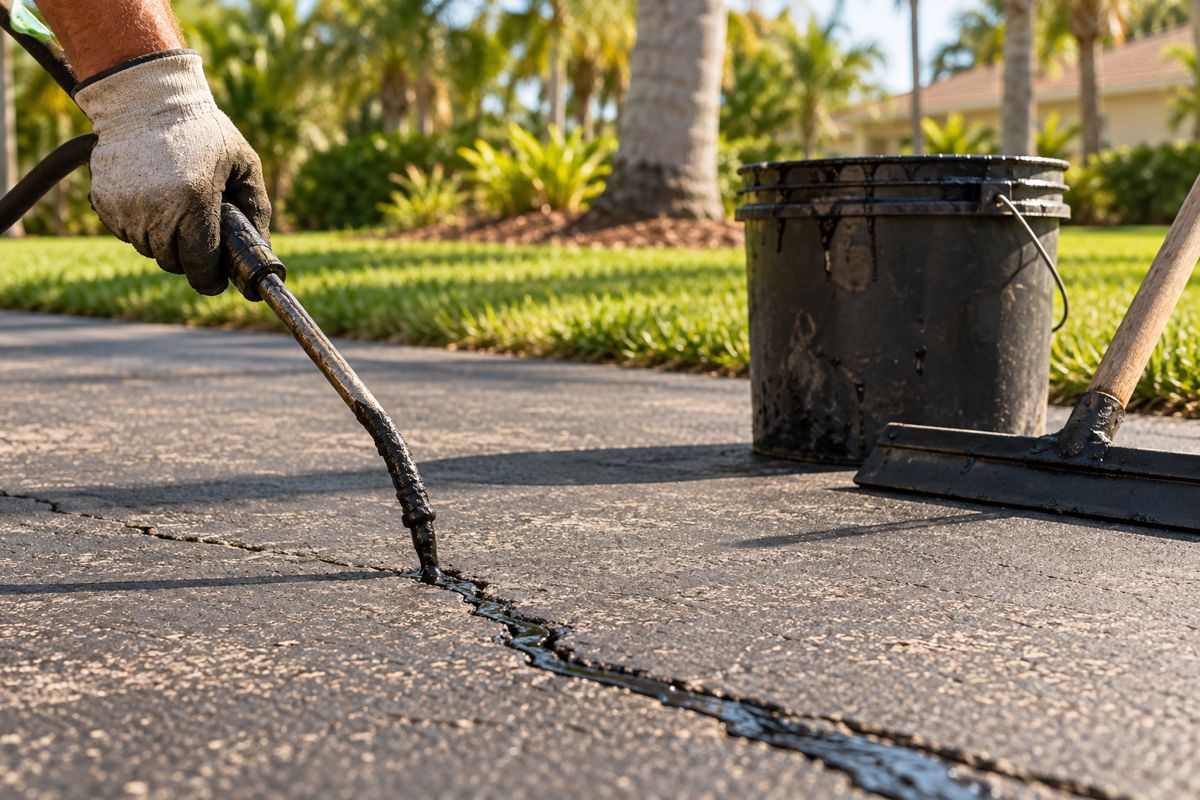
- Clean out and fill every crack
- Apply the sealcoat evenly in one or more coats
- Keep cars and feet off until the crew says it is dry
- Turn sprinklers off for the cure period
Humidity slows drying, so the wait can be longer than you expect. Driving on it too early leaves tire marks and may mean redoing the job.
What does sealcoating a driveway cost?
We cannot quote a price in an article, and it would be unfair to try. As a rough guide only, sealcoating a typical residential driveway is usually a modest cost compared with replacing it, often a few hundred dollars. That is not a quote from our company, and your number may be different. These things move it:
- The size of the driveway
- How many cracks need filling
- Oil stains and rough spots that need extra prep
- Whether it needs one coat or more
- How easy it is for the crew to reach and work on the surface
Ask for a written quote that lists crack filling and sealing separately, so you can see exactly what you are paying for.
So how often should you sealcoat in Tampa?
Start by waiting for new asphalt to cure. Then plan on a seal coat roughly every two to three years, and adjust by what you see. Faded color, rough texture and fresh cracks mean it is time. Deep cracks, sinking and potholes mean you need repair first.
If you want an honest opinion on your own driveway, our sealcoating and crack repair page explains how we work and how to ask for a written quote.